Spiral and branch
spiral_branch.py
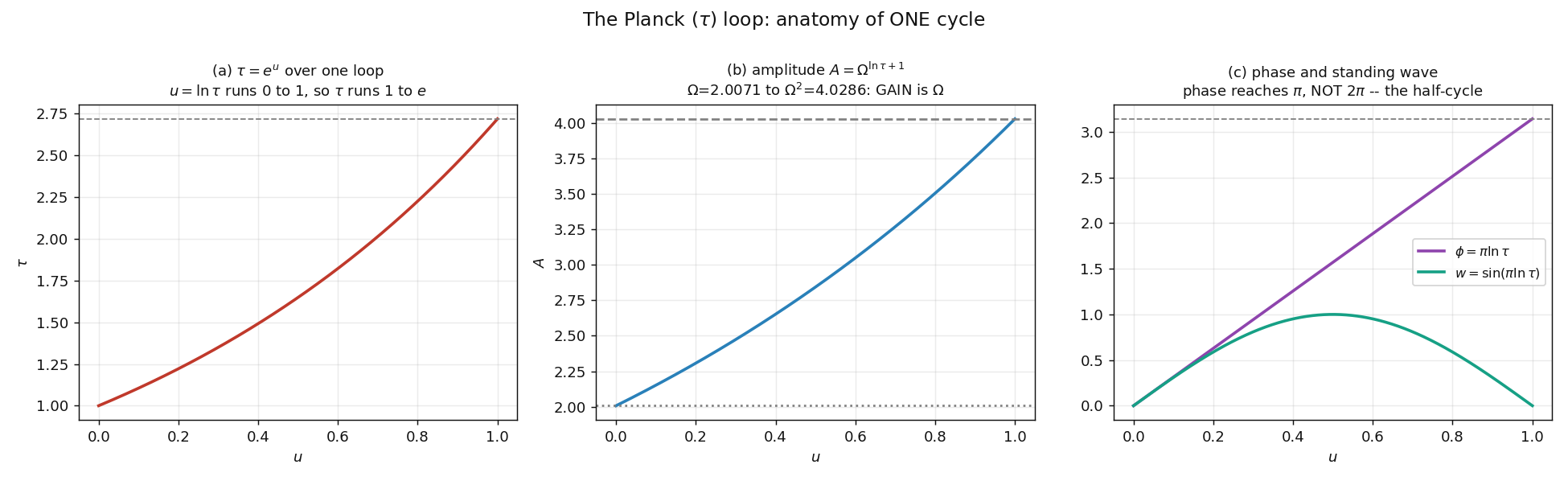
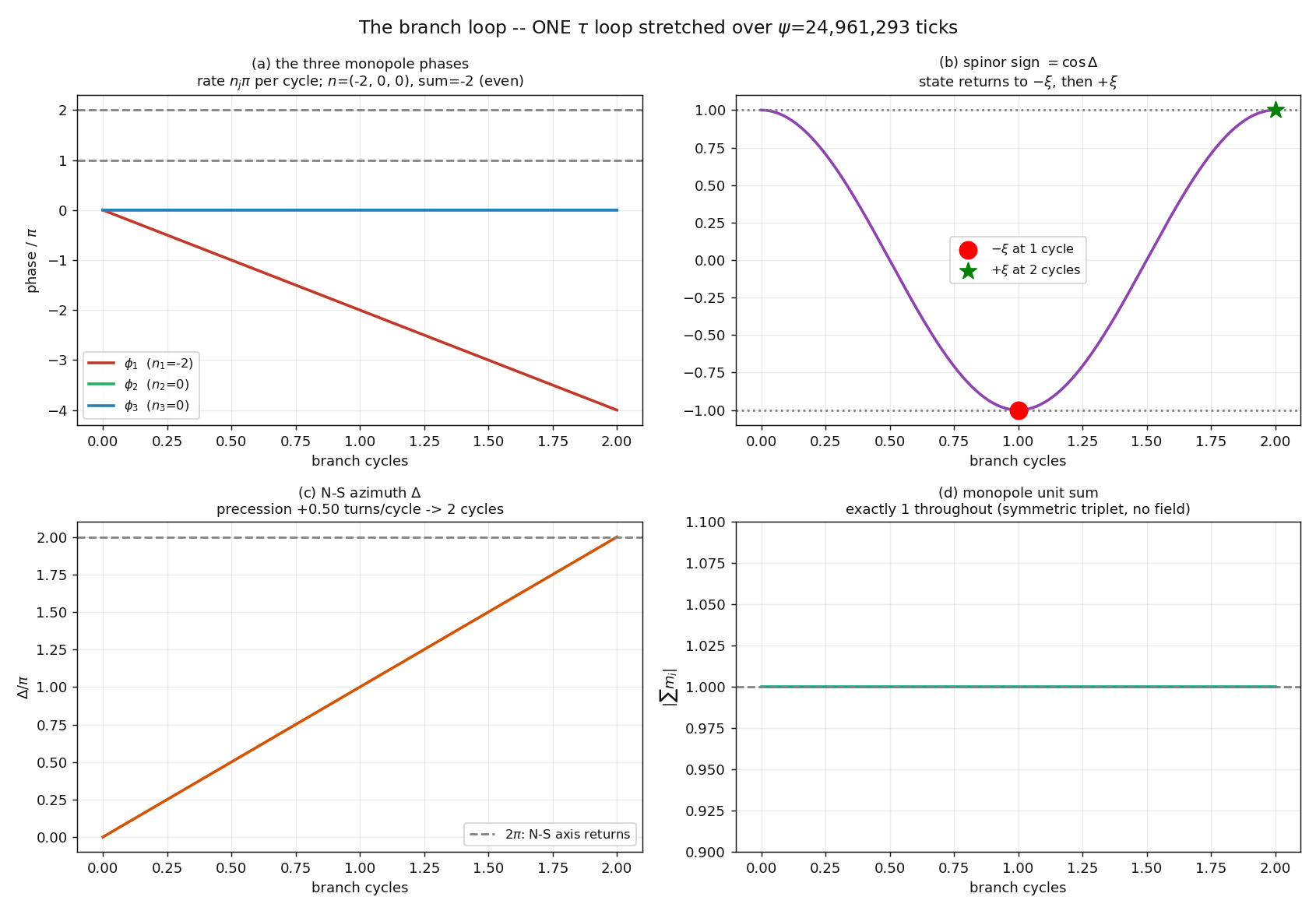
The \(\tau\)-loop is the engine driving the simulation via pi and Euler's identity, both working as complementary 'rotors' (driving rotation and expansion). At the end of each cycle the \(\tau\)-loop 'deposits' 1 unit of Planck time (and the other Planck units). Consequently the Planck units are by-products of \(\tau\) rather than a substrate \(\tau\) moves through. There is no external clock, time is generated 'tick' by (Planck) 'tick'. The Planck units are deposited in a spiral formation, the spiral radius the radiation domain and the spiral circumference as the (integer) mass-space-time domain (see Article 1a. CMB via Planck units).
download article:
site 1. article-1b_tau-branch.pdf
site 2. 10.13140/RG.2.2.12830.09283
The python codes used to test the model is included here as the primary reference (text can often be subject to interpretation).